
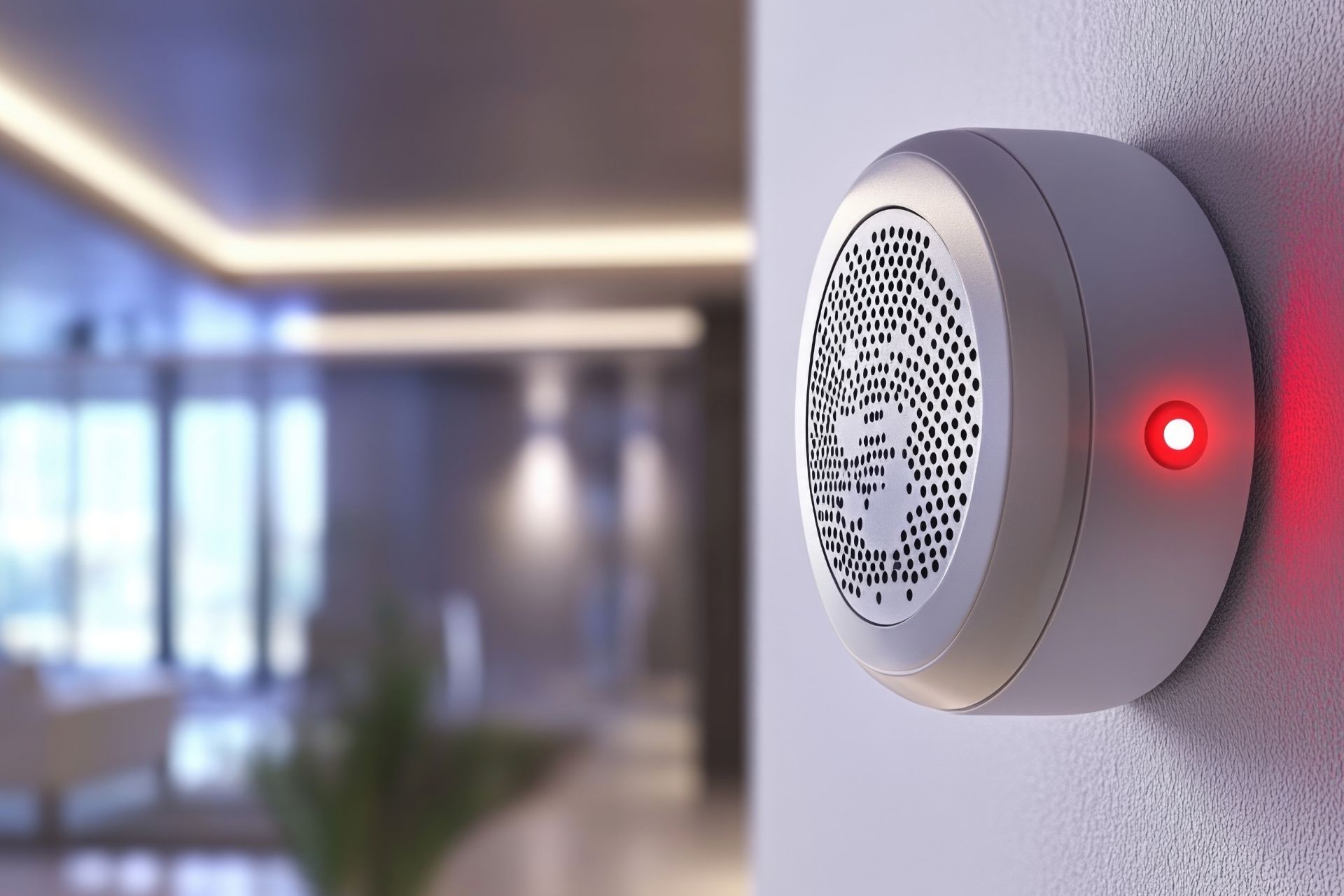
Electrical systems are the backbone of modern commercial buildings, being responsible for powering lighting, IT infrastructure, machinery, HVAC systems, and increasingly, renewable technologies such as solar PV. Yet despite their importance, electrical faults remain one of the leading causes of fires in commercial and industrial buildings.
Notably, there were 7,000 workplace fires between 2023 and 2024 with a quarter of all these fires occurring at industrial premises. More relevant still, faulty electrical equipment was identified as the biggest cause of workplace fires.
Many of these fires are not sudden or unpredictable. They are the result of developing electrical faults that generate heat over time and go undetected until failure occurs.
It is important to understand why electrical faults cause so many fires and how targeted thermography for commercial fire prevention is a critical tool for anyone responsible for building safety, compliance, insurance risk, or asset protection.
Electrical Faults and Commercial Fire Risks
Electrical faults are consistently identified as one of the most common ignition sources in commercial and industrial building fires.
Fire service data, insurance claims analysis, and post-incident investigations repeatedly point to failures within electrical distribution systems as a primary cause of serious fire events.
What makes electrical fire risks particularly dangerous is not just how often they occur, but how easily they go unnoticed.
Unlike fires caused by open flames, hot works, or human error, electrical fires often originate inside live systems, such as distribution boards, switchgear, cabling, and fixed equipment.
These faults typically develop out of sight, behind panels or within enclosures, where early warning signs are difficult to detect through routine inspection.
Common electrical fire causes in commercial buildings include:
- Loose or deteriorating connections creating high resistance
- Overloaded circuits operating beyond design capacity
- Failing switchgear, breakers, and contactors
- Poor terminations and workmanship defects
- Age-related degradation of cables and components
Each of these conditions can generate excess heat during normal operation. Over time, this heat accelerates insulation breakdown, weakens materials, and increases the likelihood of ignition.

Why Electrical Faults Are So Dangerous
Heat Is The Primary Warning Sign
Most electrical faults generate excess heat before they fail catastrophically. This heat is caused by increased electrical resistance, often due to loose connections, corrosion, mechanical wear, or component degradation.
As resistance increases components overheat, insulation breaks down and combustible materials are exposed to ignition temperatures.
In many cases, the first visible sign of a fault is fire, smoke, or system failure…appearing long after early warning signs were present.
Why Electrical Fires Are Often Classified as “Sudden”
Many electrical fires are described as sudden or unexpected, but in reality, most are the result of long-developing faults.
Electrical components rarely fail without warning. Instead, they deteriorate gradually, producing heat for weeks, months, or even years before failure occurs. Because buildings often continue to operate normally during this period, the underlying risk remains hidden.
By the time smoke, burning smells, or power loss are detected, the fault has typically reached a critical stage, leaving little opportunity to intervene before damage occurs.
The Compounding Effect of Modern Electrical Demand
Commercial buildings today place significantly greater demand on electrical infrastructure than in the past. Increased use of IT systems, automation, air conditioning, electric vehicle charging, and on-site generation places additional stress on electrical systems which may not have been designed for current load profiles.
This increased demand:
- Raises operating temperatures
- Accelerates component wear
- Increases the likelihood of overload and imbalance
- Exposes latent installation or design defects
As a result, electrical fire risks have become more prevalent, not less, despite advances in protection devices and safety standards.
Why Electrical Faults Represent a Major Insurance Risk
From an insurance and risk management perspective, electrical faults are particularly concerning because they are both common and preventable.
Electrical fires often result in:
- Extensive property damage
- Prolonged business interruption
- Complex claims investigations
- Secondary damage from smoke and fire suppression systems
For insurers, the presence of unmanaged electrical risk can significantly increase loss exposure. For building owners and operators, it can lead to higher premiums, policy conditions, or claims disputes if proactive risk management cannot be demonstrated.
UK insurers paid out approximately £1.3 billion in fire-related claims for commercial property losses, with fire damage representing a significant portion of overall property insurance payouts.
This is why electrical condition monitoring and early fault detection are increasingly recognised as critical components of commercial fire risk management.
Why Traditional Inspections Often Miss Electrical Fire Risk
Routine electrical inspections and periodic testing are an essential part of building safety, but they are not designed to identify all forms of electrical fire risk.
Most traditional inspections focus on visual condition, fixed intervals, and pass/fail criteria. While this approach confirms whether an installation meets basic safety requirements at the time of inspection, it often fails to detect developing faults inside live electrical systems.
Electrical fires rarely originate from visible defects. Instead, they typically begin with hidden resistance heating caused by loose connections, overloaded conductors, phase imbalance, or deteriorating components. These conditions generate excess heat during normal operation but may not trip protective devices or show visible signs of distress.
The Limits of Visual and Static Testing
Visual inspections can identify obvious issues such as damaged enclosures or missing covers, but they cannot see inside live equipment or measure how components behave under load.
Similarly, periodic electrical testing is often carried out under controlled or limited conditions, meaning:
- Systems may not be operating at peak load
- Intermittent faults may not be present
- Heat-related deterioration remains undetected
As a result, systems can pass inspections while still operating with elevated fire risk.
Electrical Systems Fail Under Load…Not During Rest
Most serious electrical faults only become apparent when systems are operating normally or at high demand. Heat generated by resistance increases with load, meaning faults may remain dormant during inspections and only escalate during peak usage.
It should come as no surprise that fire risk increases precisely when buildings are most active. Unfortunately, traditional inspection methods are not designed to capture this behaviour.
High Severity, Not Just High Frequency
It should be recognised that electrical faults are a leading insurance concern not only because they occur frequently, but because the financial consequences can be substantial.
In the UK, major commercial fire incidents result in an average insured loss of around £657,000 per case, highlighting the material impact such events have on business continuity and insurance exposure.
Claims linked to electrical faults commonly involve:
- Structural damage to buildings
- Destruction of critical plant and equipment
- Extended operational downtime
- Complex loss investigations
- Significant business interruption claims
For insurers, these losses can escalate rapidly, particularly in commercial and industrial environments where electrical systems support core operations.
Electrical Faults Are Often Classified as “Preventable Loss”
One of the key reasons electrical faults attract heightened insurer scrutiny, outside of the substantial associated costs, is that they rarely occur without warning.
In fact, UK fire incident data shows that electrical distribution faults, including wiring, switchgear, and distribution boards account for over 18% of workplace fires, making them the largest identifiable cause of commercial fire incidents. This prevalence reinforces why insurers often view electrical fire losses as preventable when early warning signs are missed.
Most electrical failures are preceded by measurable changes in operating condition, such as increasing resistance, rising temperatures, or abnormal load behaviour. These indicators can develop gradually over time, providing a window in which faults can be identified and addressed before escalation.
Where systems are not subject to proactive condition monitoring, insurers may view resulting losses as reasonably foreseeable and therefore preventable.
In claims investigations, questions often focus on whether:
- Electrical systems were adequately maintained
- Known risk factors were actively monitored
- Early warning signs could have been detected
- Reasonable steps were taken to reduce fire risk
The absence of evidence demonstrating proactive electrical risk management can influence how losses are assessed, potentially affecting claims outcomes, policy terms, and future premiums.
For this reason, early fault detection and documented risk control such as thermal surveys provided by Build IR and electrical thermography for commercial fire prevention are increasingly recognised as core components of effective loss mitigation, rather than optional enhancements.

The Role of Evidence In Risk Management
In commercial fire risk management, evidence matters as much as intent. Insurers, regulators, and auditors increasingly look beyond stated policies to assess whether risks are being actively identified, monitored, and controlled.
In the event of a fire or near miss, investigations often focus on what was known, what could reasonably have been known, and what actions were taken. Without documented evidence of proactive risk assessment, organisations may struggle to demonstrate that electrical risks were being effectively managed.
This is particularly relevant for electrical systems, where faults often develop internally and remain invisible without specialist inspection. Evidence such as condition monitoring records, inspection reports, and fault prioritisation demonstrates that:
- Electrical risks were recognised
- Appropriate steps were taken to identify developing issues
- Decisions were informed by objective data rather than assumption
From an insurance perspective, this evidence helps reduce uncertainty and supports fairer underwriting, claims handling, and renewal decisions.
In practice, documented insight into electrical condition is a key differentiator between reactive compliance and genuine risk control.
The Gap Between Compliance and Risk
Achieving compliance with electrical safety standards is essential, but compliance alone does not equate to low risk.
Electrical inspections and certification typically confirm that systems meet defined requirements at the time of assessment. They do not always reflect how equipment behaves during prolonged operation, peak demand, or changing load conditions, which is when many electrical faults begin to develop.
As a result, a system can be fully compliant on paper while still operating with elevated fire risk due to:
- Progressive loosening of connections
- Increasing electrical load over time
- Component ageing and thermal stress
- Changes in building use or occupancy
This creates a gap between documented compliance and real-world operating risk.
From a risk management and insurance perspective, this distinction is critical. Fire incidents are typically assessed based on actual system condition and foreseeable risk, not solely on whether minimum compliance requirements were met at a previous inspection.
Bridging this gap requires insight into how electrical systems perform in live, operational conditions, allowing developing risks to be identified and managed before they escalate into incidents.
Why Thermal Imaging Bridges The Visibility Gap
The fundamental challenge in managing electrical fire risk is visibility. Most electrical faults develop internally, generate heat under load, and remain undetectable through visual inspections or static testing. This is the gap where risk accumulates and where many commercial building fires originate.
Electrical thermal imaging fills this gap by assessing live electrical systems in real operating conditions, revealing abnormal heat patterns that indicate developing faults long before failure occurs.
Infrared inspections allow organisations to:
- See early warning signs that are otherwise invisible
- Identify elevated fire risk before ignition
- Prioritise remedial action based on severity, not assumption
- Move from reactive response to proactive risk control
Industry experience and predictive maintenance studies show that thermal imaging can identify 85 – 90 % of electrical faults before they escalate into failure, with clear thermal anomalies appearing weeks or months in advance, giving businesses crucial time to act and prevent fires or unplanned downtime.
Turning Insight Into Prevention
Thermal imaging does not replace traditional inspections but instead it completes them.
By adding visibility into how systems behave under real-world conditions, electrical thermography bridges the gap between:
- Compliance and actual operating risk
- Maintenance schedules and emerging faults
- Documented safety and demonstrable risk control
For insurers, this reduces uncertainty.
For building owners and operators, it reduces exposure.
For occupants, it reduces danger.
Electrical Thermography For Commercial Fire Prevention: From Compliance to Control
Effective fire risk management requires more than periodic checks and compliance certificates. It requires evidence-based insight into the true condition of electrical systems.
Electrical thermal imaging provides that insight, enabling organisations to identify hidden risk, take proportionate action, and demonstrate proactive management of one of the most significant fire hazards in commercial buildings.
To learn more about how electrical thermography supports fire risk reduction, compliance, and asset protection, explore Build IR’s Electrical Thermal Imaging services, delivered across the UK for commercial and industrial environments.